How a global luxury fashion brand streamlined catalog and inventory sync with Fynd Boltic
Learn how a global luxury fashion brand streamlined retail operations by implementing Fynd Boltic as a workflow automation layer across systems. By centralizing automation across catalog, inventory, and order systems, the brand achieved faster deployment cycles, consistent data flow, and improved operational efficiency. The implementation created a scalable foundation that supports growing transaction volumes while allowing teams to focus on optimization rather than routine data handling.
INDUSTRY
SOLUTIONS
IMPACT


10k+
Order events processed

2.9k+
Total product count

259k+
Inventory updates handled

About Brand
The customer is a globally recognized luxury fashion house with nearly a century of heritage in premium apparel and accessories. The brand operates internationally through multiple labels and retail channels, offering clothing, footwear, accessories, fragrances and more. Over decades, the company has evolved into one of the world’s leading fashion retailers, known for modern tailoring, contemporary design, and a strong omnichannel retail presence across regions.
The Problem
The brand needed a controlled and scalable approach to integrate key retail data: catalogs, inventory, orders, and sales, across internal systems and platforms. With multiple teams involved and high data sensitivity, they required:
- A dedicated sandbox environment for safe testing and iteration
- A separate production account for clean deployments
- A customer support sync needed for partner operations
- Scalable infrastructure to handle increasing usage and future data integrations
The Solution
INTEGRATIONS USED
Freshdesk, Slack, Gmail, Google Sheets, Fynd Platform, Tradeling, Brand’s ERP system


TOTAL WORKFLOWS
120+
WORKFLOW EXECUTIONS
43M+
Tools used:
- Solutions: Workflow, Integrations, Serverless, Tables
- Platform: Fynd Boltic (Sandbox & Production Accounts)
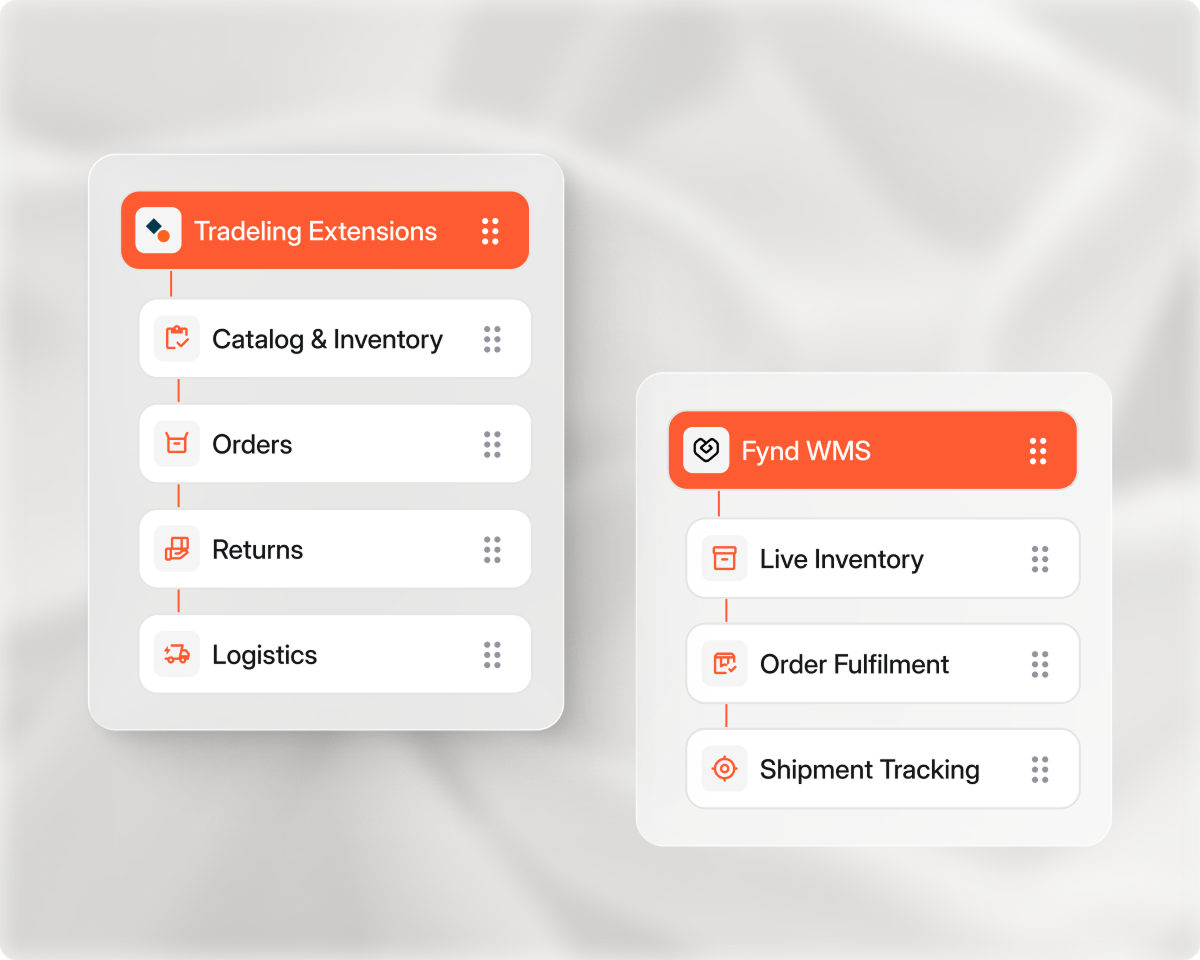
- Data Sources & Destinations: Tradeling WMS <-> Fynd Commerce Platform <-> Brand ERP
Key solutions:
- Backend is built primarily on Fynd Boltic Serverless, using Workflow Builder for scalability
- Full-stack automation layer covering OMS, Catalog, Inventory and third-party integrations
Implementation highlights
Tradeling catalog integration
- The brand’s catalog is synced with Fynd commerce platform via Fynd Boltic, with automated success/failure email notifications.
- Fynd integrated with Tradeling through Fynd Boltic to automate catalog, inventory, and warehouse data flows.
Delivery note EDI (Advanced Shipping Notice) integration
A robust two-way integration between brand and Tradeling systems enables advance shipment notifications from the brand’s origin warehouses to regional fulfillment centers, including SKU details, quantities, and expected delivery timelines, ensuring transparency and readiness across the supply chain.
Receive advice integration
Once products are inwarded into Tradeling’s warehouse, Fynd captures the receiving data and sends a confirmation back to the brand’s ERP. This two-way sync ensures accurate, real-time inventory updates and enhances supply chain visibility.
WMS integration with Tradeling
Live inventory updates, order fulfillment status, and shipment tracking are synchronized directly with Tradeling’s warehouse management system.
Contact form ticket automation
Website contact form submissions are automatically converted into support tickets through Fynd Boltic APIs to Tradeling, eliminating manual intervention.
WhatsApp messaging integration
WhatsApp messages are triggered via Fynd Boltic, routed through an approved messaging provider’s APIs, and delivered to customers using approved templates.
Automated order failure handling
Fynd Boltic automatically captures order failure events, triggering Slack alerts to teams, and auto-generates support tickets to monitor and resolve daily failures efficiently.
The Outcome
TOTAL EVENTS CAPTURED
19.5M+
EVENT SUCCESS RATE
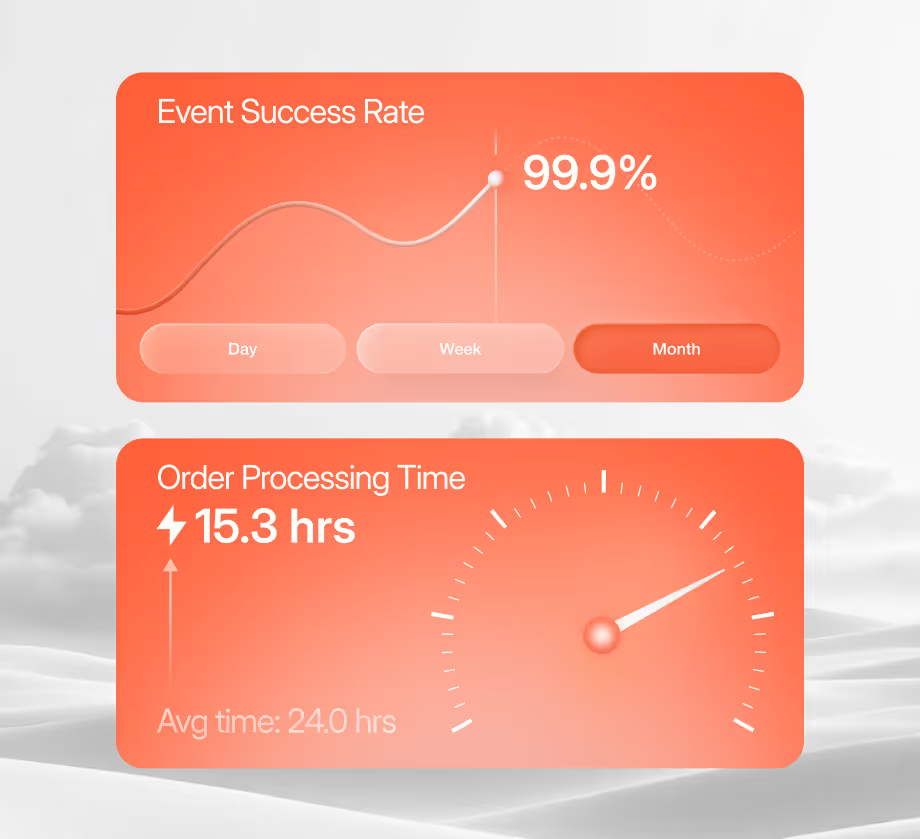
99.9%
AVERAGE ORDER PROCESSING TIME
~15.3 hours
By implementing a structured sandbox-to-production workflow strategy on Fynd Boltic, the brand established a reliable and scalable automation layer across its retail data operations.
Key outcomes included:
Improved data consistency across systems
Automated workflows for article pricing updates, real-time inventory sync, inventory adjustments, and system logging ensured consistent data flow across internal platforms with 99.9% event success rate.
Operational efficiency at scale
End-to-end automation brought average order processing time down to ~15.3 hours, allowing teams to focus on exception handling and optimization rather than routine data movement.
Production stability and future readiness
The dual-account setup enabled the brand to confidently scale usage and onboard additional business-critical workflows such as order and sales integrations without disrupting existing operations.
Faster integration cycles
Teams were able to test, iterate, and validate workflows in a sandbox environment before production rollout, significantly reducing deployment risk and rework.
Looking Ahead
With Fynd Boltic’s scalable workflow architecture, the brand is well-positioned to support growing data volumes, evolving system integrations, and future digital initiatives while maintaining reliability and control. As transaction volumes grow and market dynamics evolve, the brand can confidently support increased scale without introducing additional complexity. This strong operational backbone empowers the brand to capitalize on its global presence, strengthen omnichannel execution, and continue to be a trusted leader, backed by processes designed to scale, adapt, and perform under pressure.
Speak with a specialist
Our team can help you understand how Fynd Boltic supports automation across your systems
Trusted by leading organizations





Backed by enterprise-grade security and built to scale